Greg’s Kitchen Rating ⭐
⭐⭐⭐⭐⭐ Taste
⭐⭐⭐☆☆ Difficulty
⭐⭐⭐⭐⭐ Would I Make It Again?
⭐⭐⭐⭐⭐ Family Approved
⭐⭐⭐⭐⭐ Freezer Friendly
⭐⭐⭐⭐⭐ Worth Buying a Bread Machine?
This recipe completely changed how I think about bread. I honestly believed fresh bread was something I’d have to give up after being diagnosed with CHF. Buying a bread machine turned out to be one of the best investments we’ve made for our kitchen—and our health.
Sometimes You Don’t Have to Give Up the Foods You Love
One of the hardest things about switching to a low sodium lifestyle wasn’t giving up potato chips or fast food.
It was bread.
Bread has always been a part of our meals. Toast with breakfast. A sandwich for lunch. Fresh bread alongside pasta or soup. I never really thought much about it until I started reading nutrition labels after being diagnosed with congestive heart failure.
That’s when I realized something surprising.
Even ordinary sandwich bread can contain a significant amount of sodium in just a couple of slices. When you’re trying to stay within a daily sodium limit, those numbers add up quickly.
I wasn’t ready to give up bread.
Instead, my wife and I decided to find another solution.
We bought a bread machine.
At first, I wasn’t sure if it would be worth it. Neither of us had much experience baking bread, and I honestly wondered if homemade bread could taste as good as what we were buying at the grocery store.
It didn’t take long to find out.
Not only did it taste better, but I finally had something I hadn’t had in a long time—control.
I knew exactly what was going into every loaf.
I could leave out the added salt.
I could choose the ingredients.
And for the first time since changing my diet, bread was back on the menu.
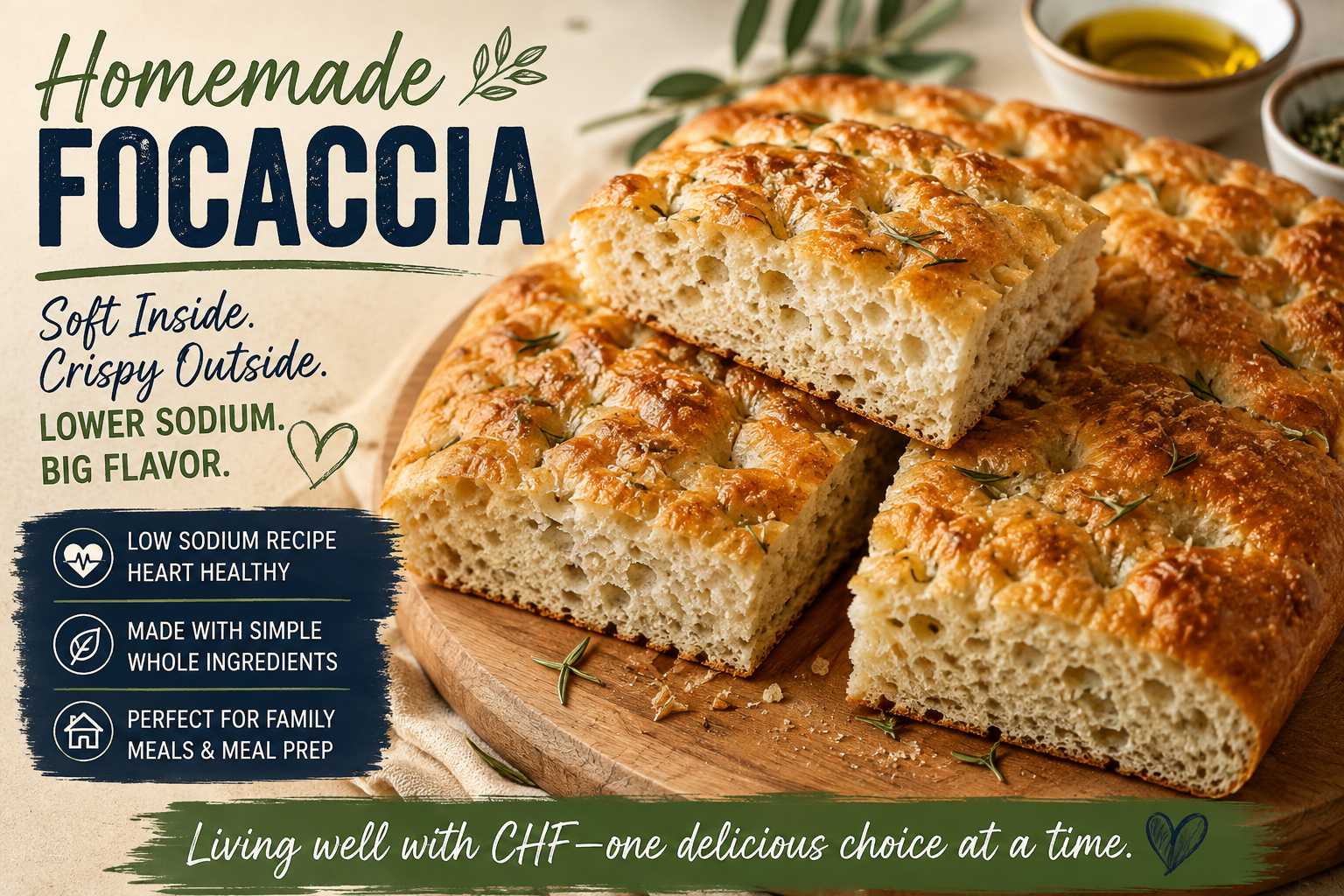
One of the first recipes we tried was a No-Salt Focaccia recipe from Paula Rhodes at Salad in a Jar. What caught my attention was that the bread machine does all of the hard work—mixing, kneading, and the first rise—while the focaccia is finished in the oven to create a crisp crust and a soft, airy interior.
The recipe uses simple ingredients like bread flour, olive oil, honey, Italian seasoning, and yeast to build flavor naturally instead of relying on salt. The result is a focaccia that’s light, flavorful, and incredibly versatile. We’ve enjoyed it as a side with pasta, dipped in olive oil and herbs, and even sliced for sandwiches.
One thing I’ve learned throughout this journey is that living with chronic illness doesn’t always mean giving things up.
Sometimes it simply means learning a different way to make them.
Buying a bread machine wasn’t really about making bread.
It was about taking back something I thought I had lost.
Every loaf reminds me that a low sodium lifestyle doesn’t have to be about deprivation. With a little creativity—and sometimes a new kitchen gadget—you can still enjoy many of the foods you love.
❤️ Greg’s Tip
If you’re thinking about buying a bread machine, don’t look at it as another appliance taking up space on your counter.
Think of it as an investment in your health.
For me, it opened the door to fresh, homemade bread with ingredients I could control. That peace of mind has been worth every penny.
Recipe Credit
This focaccia recipe was created by Paula Rhodes of Salad in a Jar. I’ve shared my experience because it has become one of my favorite homemade bread recipes for a low sodium lifestyle. If you’d like the complete recipe and detailed step-by-step instructions, you can find it here:
No-Salt Focaccia (Bread Machine Dough + Oven Bake) by Paula Rhodes.
Chronic illness may change how I eat, but it doesn’t get to decide what I enjoy.
Leave a Reply