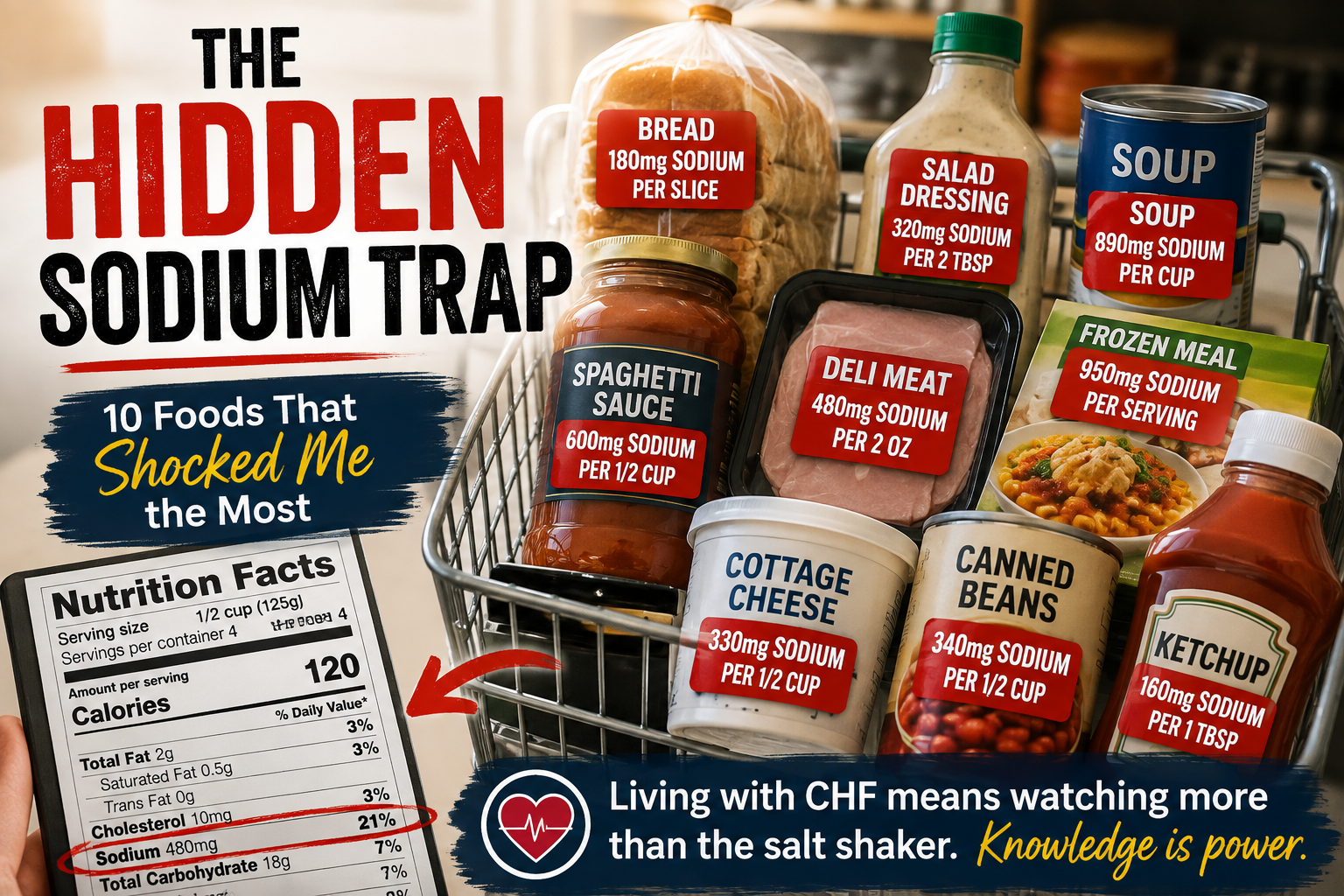
10 Foods That Shocked Me the Most
When I was diagnosed with congestive heart failure (CHF), I thought I knew what my biggest challenge would be.
The salt shaker.
I figured if I stopped adding salt to my food, I’d be well on my way to a healthier lifestyle.
I couldn’t have been more wrong.
The real problem wasn’t the salt I was adding.
It was the sodium that had already been added before I ever bought the food.
That realization completely changed the way I shop, cook, and eat.
Today, I spend more time reading nutrition labels than I ever imagined possible. At first it felt overwhelming. Every trip to the grocery store became an investigation. I’d pick up one product after another, flip it over, and immediately look for one thing:
How much sodium is in this?
What I discovered surprised me.
Some of the biggest sources of sodium weren’t the foods I expected. They were foods that most of us buy every week without giving them a second thought.
Here are ten foods that completely changed the way I grocery shop.
1. Bread
Many sandwich breads contain well over 150–200 mg of sodium per slice. That means a simple sandwich can provide several hundred milligrams of sodium before you even add the meat, cheese, or condiments.
Bread was probably my biggest surprise. I never imagined something that didn’t even taste salty could contain so much sodium. After comparing label after label, I finally decided to buy a bread machine. Instead of giving up bread altogether, I learned to make my own. Now I know exactly what goes into every loaf, I can control the sodium, and I get to enjoy fresh bread again.
If you don’t make your own, make sure you read labels and look for lower-sodium options whenever possible.
2. Salad Dressing
Salads are supposed to be healthy.
Unfortunately, many bottled dressings aren’t.
A couple of tablespoons can contain more sodium than the salad itself.
These days I often make my own dressings at home. Not only are they lower in sodium, but I actually enjoy the flavor more because I can control the ingredients.
3. Jarred Spaghetti Sauce
This one hurt.
Spaghetti has always been one of my favorite comfort foods.
Some jarred sauces contain several hundred milligrams of sodium in just a half-cup serving.
Instead of giving up spaghetti, I learned to make my own sauce using no-salt-added tomatoes and fresh herbs.
Check out my article here on LOSO Spaghetti Sauce
Problem solved.
4. Canned Soup
This one probably won’t surprise many people.
Some soups contain nearly an entire day’s worth of sodium in one bowl.
If I buy soup today, it’s almost always a low-sodium or no-salt-added version—or better yet, homemade.
5. Deli Meats
Ham.
Turkey.
Roast beef.
Chicken.
I thought I was making healthy sandwich choices.
Then I learned these meats are often preserved with large amounts of sodium.
Today I prefer freshly cooked chicken or turkey whenever possible.
6. Cottage Cheese
This one really caught me off guard.
Cottage cheese seems like the perfect healthy snack.
Unfortunately, many brands are surprisingly high in sodium.
Fortunately, more companies are beginning to offer lower-sodium versions if you’re willing to look for them.
The one I found that is low in sodium is by Friendship at Publix
7. Frozen Meals
Convenience often comes with a price.
Many frozen dinners are loaded with sodium because it’s used for preservation and flavor.
That’s one of the reasons I cook extra portions whenever I can.
My freezer has become my own “frozen food aisle”—except I know exactly what’s in every meal.
8. Canned Vegetables
This one is easy to fix.
Instead of regular canned vegetables, I buy no-salt-added versions whenever they’re available.
Sometimes frozen vegetables are an even better choice.
9. Condiments
Ketchup.
Mustard.
Barbecue sauce.
Soy sauce.
Teriyaki sauce.
You don’t use much at one time, but the sodium adds up quickly.
I’ve learned that sometimes a squeeze of lemon juice, fresh herbs, or homemade sauces add just as much flavor without the extra sodium.
Or check out the link to our homemade stir-fry sauce
10. Restaurant Meals
This has probably been the hardest adjustment for me.
Restaurants aren’t trying to make unhealthy food.
They’re trying to make food that tastes great.
Unfortunately, that often means using generous amounts of salt.
Before I go out to eat, I almost always look at the menu online. If nutrition information is available, I read it before I ever walk through the door.
Planning ahead helps me make better choices.
What I Learned
Looking back, I realized something important.
The biggest source of sodium in my diet wasn’t the salt shaker sitting on my kitchen table.
It was the food I was buying at the grocery store without ever reading the labels.
Once I understood that, everything changed.
Today I still enjoy sandwiches.
I still eat spaghetti.
I still have salads.
I simply prepare them differently.
Living with CHF hasn’t meant giving up the foods I love.
It has meant learning how to make better choices.
And honestly…
I’m healthier because of it.
❤️ Greg’s Tip
Don’t start by changing your entire pantry.
Instead, the next time you’re grocery shopping, pick one product you buy regularly and compare three different brands.
You might be amazed at how much the sodium content varies.
Small changes, repeated over time, become healthier habits.
Keep an eye out for a new article where I will compare 3 of the same products and pick the best option
My Challenge to You
The next time you’re in the grocery store, don’t look at the front of the package first.
Turn it over.
Read the Nutrition Facts label.
Take a close look at the sodium.
It may completely change what goes into your shopping cart.
Leave a Reply