Tag: CHF

  • Bringing Blackened Fish Back to My Low Sodium Diet

    Bringing Blackened Fish Back to My Low Sodium Diet

    Affiliate Disclosure: This post contains an affiliate link. If you make a purchase through the link, I may earn a small commission at no additional cost to you. I only share products that I personally use or believe may be helpful. of the things I’ve missed most since switching to a low sodium lifestyle is blackened seafood.

    I’ve mentioned before that one of the reasons we moved to Southwest Florida was the seafood. I love blackened fish and shrimp, but traditional blackening seasonings can contain more sodium than I’m comfortable with.

    So, like a lot of things since being diagnosed with CHF, I started looking for another way.

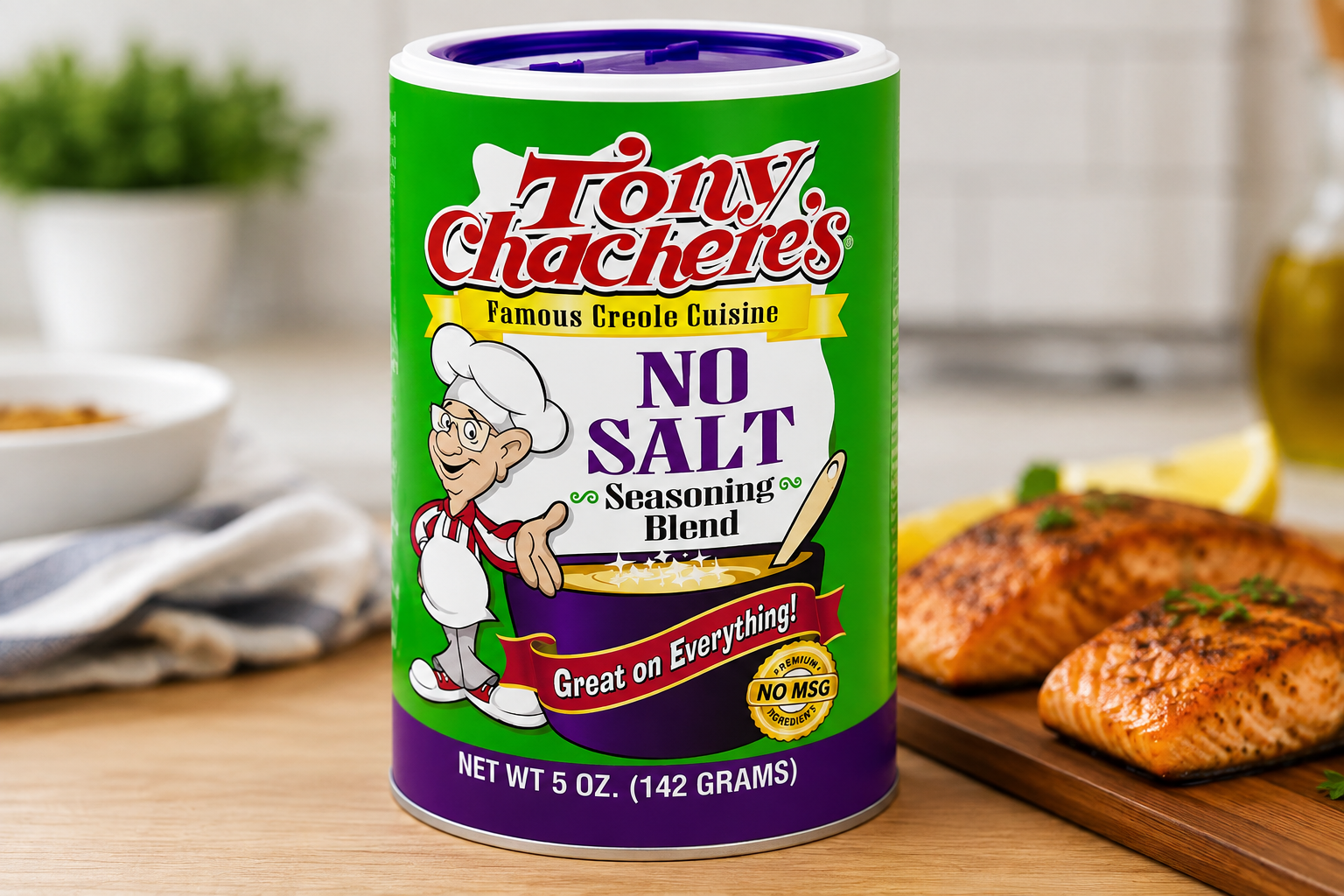
    That’s when I found Tony Chachere’s No Salt Seasoning.

    I’ve been using it at home as an alternative to traditional blackening seasoning, particularly on fish and shrimp. 

    And I’ve been really happy with it.

    Getting the Flavor Back

    One of the biggest lessons I’ve learned about low sodium cooking is that removing salt doesn’t have to mean removing flavor.

    You just have to find other ways to get there.

    When I cook fish or shrimp, I use this seasoning much like I would have used a traditional blackening seasoning in the past. It gives me that Cajun-style flavor I’m looking for without having to rely on the seasoning blends I used before.

    Is it exactly the same as ordering a heavily seasoned piece of blackened grouper at a waterfront restaurant?

    Probably not.

    But I can make it at home, control what goes into the meal, and enjoy something I thought I might have to give up.

    That’s a pretty good trade in my book.

    This Is What Low Sodium Living Has Become for Me

    This seasoning is a perfect example of why I created the Low Sodium Living section of this website.

    I’m not interested in spending the rest of my life eating bland chicken and steamed vegetables.

    I want food that I actually look forward to eating.

    Sometimes that means making spaghetti sauce from scratch.

    Sometimes it means buying a bread machine so I can enjoy bread again.

    And sometimes it’s as simple as finding a seasoning that lets me put fish and shrimp back on the menu.

    The goal isn’t to recreate my old diet.

    It’s finding new ways to enjoy the foods I love while making choices that work better for my health.

    Where I Use It

    Fish and shrimp are where I use this seasoning the most, but I’m going to start sharing some of the recipes where I’ve substituted it for traditional blackening seasoning.

    As I add those recipes to the site, I’ll link them here so this page becomes a place you can come back to for ideas.

    Would I recommend it?

    Absolutely.

    It’s exactly the kind of product I want to feature under Helpful Finds: something I actually use in my own kitchen that has made living with a low sodium diet a little easier.

    Living with CHF has taken some foods off my menu.

    But every once in a while, I find something that lets me put one back on.

    That’s a helpful find worth sharing.

    Where to Find It

    I purchased mine online. You can see the seasoning I use here:

    Tony Chachere’s No Salt Seasoning on Amazon

    Disclosure: If this is an affiliate link, I may earn a small commission if you make a purchase through it, at no additional cost to you.

  • Eating Out with CHF Isn’t Easy

    Eating Out with CHF Isn’t Easy

    Finding a Balance Between Protecting Your Health and Living Your Life

    One of the biggest changes I wasn’t prepared for after being diagnosed with congestive heart failure wasn’t taking medication or weighing myself every morning.

    It was eating out.

    For most people, going to a restaurant is just another meal.

    For me, it became a decision.

    Is this restaurant going to have something I can safely eat?

    How much sodium is hidden in the food?

    Will this one meal cause me to retain fluid for the next two days?

    Those questions have changed the way I look at restaurants forever.

    The hardest part isn’t actually the food.

    It’s what restaurants represent.

    Restaurants are where families celebrate birthdays.

    They’re where friends catch up over lunch.

    They’re where couples enjoy date nights.

    Sharing a meal is one of the ways we stay connected to one another, and when chronic illness forces you to think twice about every menu, it can feel like you’re slowly becoming disconnected from that part of life.

    I’ve experienced that feeling more than once.

    There have been times when I’ve simply decided it was easier to stay home than spend the entire meal worrying about sodium.

    While that protects my heart, it also means saying no to moments with family and friends.

    That isn’t an easy trade-off.

    Some of My Favorite Foods Are Now Memories

    One of the reasons my wife and I moved to Southwest Florida was the seafood.

    We couldn’t wait to enjoy fresh fish, shrimp, and all of the wonderful waterfront restaurants this area has to offer.

    One of my favorite meals was blackened fish or blackened shrimp.

    Today, those meals are mostly memories.

    The seasonings that give blackened seafood its incredible flavor also bring a tremendous amount of sodium. While there may be exceptions, I’ve learned that it’s usually not a risk worth taking.

    Another favorite of mine has always been clam chowder.

    I honestly can’t remember the last time I had a bowl.

    Restaurant soups are often loaded with sodium, and clam chowder is probably one of those foods I’ll simply never enjoy again.

    Those may seem like small sacrifices to some people.

    But they’re reminders that chronic illness changes more than your health.

    It changes traditions.

    It changes favorite meals.

    It changes experiences you once took for granted.

    Preparation Starts Before I Leave Home

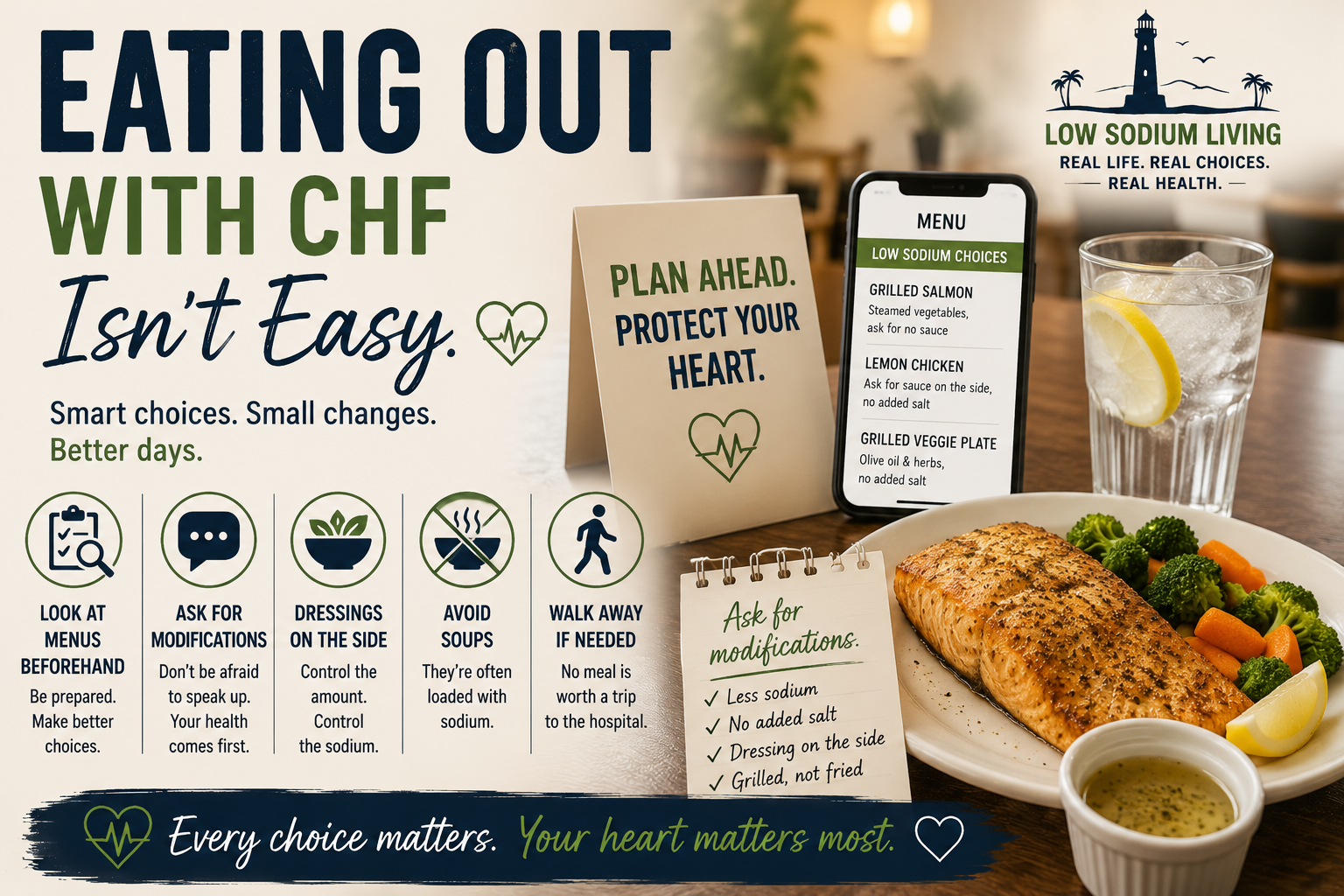
    One of the best habits I’ve developed is looking at the restaurant’s menu before I ever get in the car.

    Many restaurants now publish their menus online, and some even provide nutrition information. That gives me the opportunity to look for grilled foods, fresh vegetables, simple salads, or meals that can be modified before I ever sit down.

    Walking into a restaurant with a plan removes a lot of the stress.

    Sometimes I already know exactly what I’m going to order before I walk through the front door.

    Don’t Be Afraid to Ask Questions

    I’ve learned that it’s okay to ask.

    Can the chicken be grilled without seasoning?

    Can the vegetables be prepared without added salt?

    Can the sauce be served on the side?

    Most servers genuinely want to help if they understand why you’re asking.

    You’re not being difficult.

    You’re simply trying to take care of your health.

    Dressing on the Side

    Salads seem like the obvious healthy choice.

    Unfortunately, many bottled dressings contain surprising amounts of sodium.

    I’ll often order my dressing on the side so I can control how much I use.

    I’ll admit something else.

    There have even been times when I’ve quietly brought my own homemade low-sodium dressing with me.

    Some restaurants don’t allow outside food because they can’t guarantee its safety or accept responsibility if someone becomes ill. I completely understand and respect their position.

    When I can’t bring my own dressing, I’ll often ask for olive oil and lemon wedges instead.

    It’s a simple solution that still lets me enjoy the salad.

    Soup Is Usually Off My List

    This one still bothers me.

    I love soup.

    Unfortunately, soup is one of the biggest hidden sources of sodium in many restaurants.

    Even a small bowl can contain more sodium than I’d like to eat in an entire day.

    As much as I enjoy it, soup has become something I almost always skip.

    It’s Not Just the Sodium

    One thing people often don’t realize is that my challenge isn’t only sodium.

    It’s fluids too.

    Because of my heart failure, I’m limited to about 1.5 liters of fluid each day.

    That means every drink counts.

    Water.

    Coffee.

    Tea.

    Soft drinks.

    Even healthy beverages.

    They’re all part of the same daily limit.

    Then there’s alcohol.

    For many people, meeting friends for a drink is just another way to socialize.

    For me, alcohol is no longer part of the equation.

    When friends gather around a table with drinks in hand, it reminds me that chronic illness changes more than what you eat.

    Sometimes it changes how you participate in life’s social moments.

    I’ll be honest…

    That’s something I still haven’t learned how to manage very well.

    Sometimes the Best Decision Is to Walk Away

    This has probably been the hardest lesson.

    There have been times when I looked over a menu and realized there simply wasn’t a good option.

    Instead of convincing myself that “one meal won’t matter,” I’ve learned it’s okay to leave and find another restaurant.

    Years ago, I probably wouldn’t have done that.

    Today, I remind myself that protecting my health is more important than protecting my pride.

    I’m Still Learning

    If I’m being completely honest…

    I haven’t figured this out yet.

    Eating out with CHF remains one of the biggest challenges in my life.

    I still miss the freedom of ordering whatever sounds good.

    I miss seafood dinners without worrying about sodium.

    I miss a bowl of clam chowder on a cool afternoon.

    I miss walking into a restaurant without studying the menu before I leave home.

    But I’m learning that living with chronic illness isn’t about finding perfect solutions.

    It’s about making the best decisions you can with the information you have.

    Most days that means eating at home.

    Some days it means asking a dozen questions before ordering.

    And sometimes…

    It means deciding that spending time with the people you love is worth the extra effort it takes to find a meal you can enjoy safely.

    I still believe there has to be a compromise.

    A way to protect my health without completely giving up one of the most important ways people connect with each other.

    I haven’t found that balance yet.

    But I’m still looking.

    Screen capture this and carry it with you when you go out

    🍽️ My Restaurant Checklist

    ✔️ Read the menu online first.

    ✔️ Look for grilled or baked options.

    ✔️ Ask for sauces and dressings on the side.

    ✔️ Skip soups and heavily seasoned foods.

    ✔️ Watch both sodium and fluids.

    ✔️ Don’t be afraid to ask questions.

    ✔️ If there isn’t a good option, choose another restaurant.
  • Homemade Low Sodium Focaccia

    Homemade Low Sodium Focaccia

    Greg’s Kitchen Rating

    ⭐⭐⭐⭐⭐ Taste

    ⭐⭐⭐☆☆ Difficulty

    ⭐⭐⭐⭐⭐ Would I Make It Again?

    ⭐⭐⭐⭐⭐ Family Approved

    ⭐⭐⭐⭐⭐ Freezer Friendly

    ⭐⭐⭐⭐⭐ Worth Buying a Bread Machine?

    This recipe completely changed how I think about bread. I honestly believed fresh bread was something I’d have to give up after being diagnosed with CHF. Buying a bread machine turned out to be one of the best investments we’ve made for our kitchen—and our health.

    Sometimes You Don’t Have to Give Up the Foods You Love

    One of the hardest things about switching to a low sodium lifestyle wasn’t giving up potato chips or fast food.

    It was bread.

    Bread has always been a part of our meals. Toast with breakfast. A sandwich for lunch. Fresh bread alongside pasta or soup. I never really thought much about it until I started reading nutrition labels after being diagnosed with congestive heart failure.

    That’s when I realized something surprising.

    Even ordinary sandwich bread can contain a significant amount of sodium in just a couple of slices. When you’re trying to stay within a daily sodium limit, those numbers add up quickly. 

    I wasn’t ready to give up bread.

    Instead, my wife and I decided to find another solution.

    We bought a bread machine.

    At first, I wasn’t sure if it would be worth it. Neither of us had much experience baking bread, and I honestly wondered if homemade bread could taste as good as what we were buying at the grocery store.

    It didn’t take long to find out.

    Not only did it taste better, but I finally had something I hadn’t had in a long time—control.

    I knew exactly what was going into every loaf.

    I could leave out the added salt.

    I could choose the ingredients.

    And for the first time since changing my diet, bread was back on the menu.

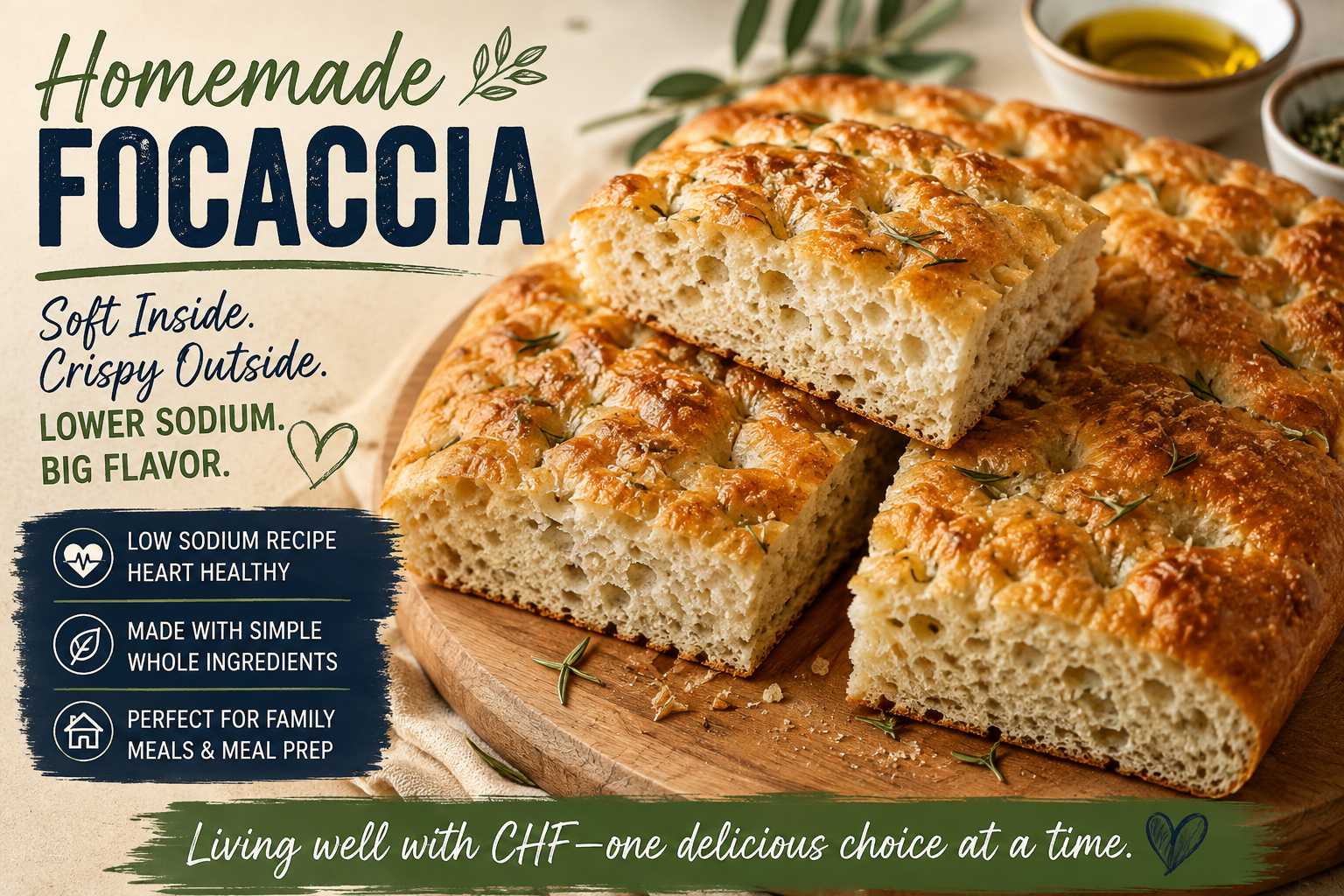
    One of the first recipes we tried was a No-Salt Focaccia recipe from Paula Rhodes at Salad in a Jar. What caught my attention was that the bread machine does all of the hard work—mixing, kneading, and the first rise—while the focaccia is finished in the oven to create a crisp crust and a soft, airy interior. 

    The recipe uses simple ingredients like bread flour, olive oil, honey, Italian seasoning, and yeast to build flavor naturally instead of relying on salt. The result is a focaccia that’s light, flavorful, and incredibly versatile. We’ve enjoyed it as a side with pasta, dipped in olive oil and herbs, and even sliced for sandwiches. 

    One thing I’ve learned throughout this journey is that living with chronic illness doesn’t always mean giving things up.

    Sometimes it simply means learning a different way to make them.

    Buying a bread machine wasn’t really about making bread.

    It was about taking back something I thought I had lost.

    Every loaf reminds me that a low sodium lifestyle doesn’t have to be about deprivation. With a little creativity—and sometimes a new kitchen gadget—you can still enjoy many of the foods you love.


    ❤️ Greg’s Tip

    If you’re thinking about buying a bread machine, don’t look at it as another appliance taking up space on your counter.

    Think of it as an investment in your health.

    For me, it opened the door to fresh, homemade bread with ingredients I could control. That peace of mind has been worth every penny.


    Recipe Credit

    This focaccia recipe was created by Paula Rhodes of Salad in a Jar. I’ve shared my experience because it has become one of my favorite homemade bread recipes for a low sodium lifestyle. If you’d like the complete recipe and detailed step-by-step instructions, you can find it here:

    No-Salt Focaccia (Bread Machine Dough + Oven Bake) by Paula Rhodes. 

    Chronic illness may change how I eat, but it doesn’t get to decide what I enjoy.