When I was in the hospital and found out I had congestive heart failure, I knew something wasn’t right.
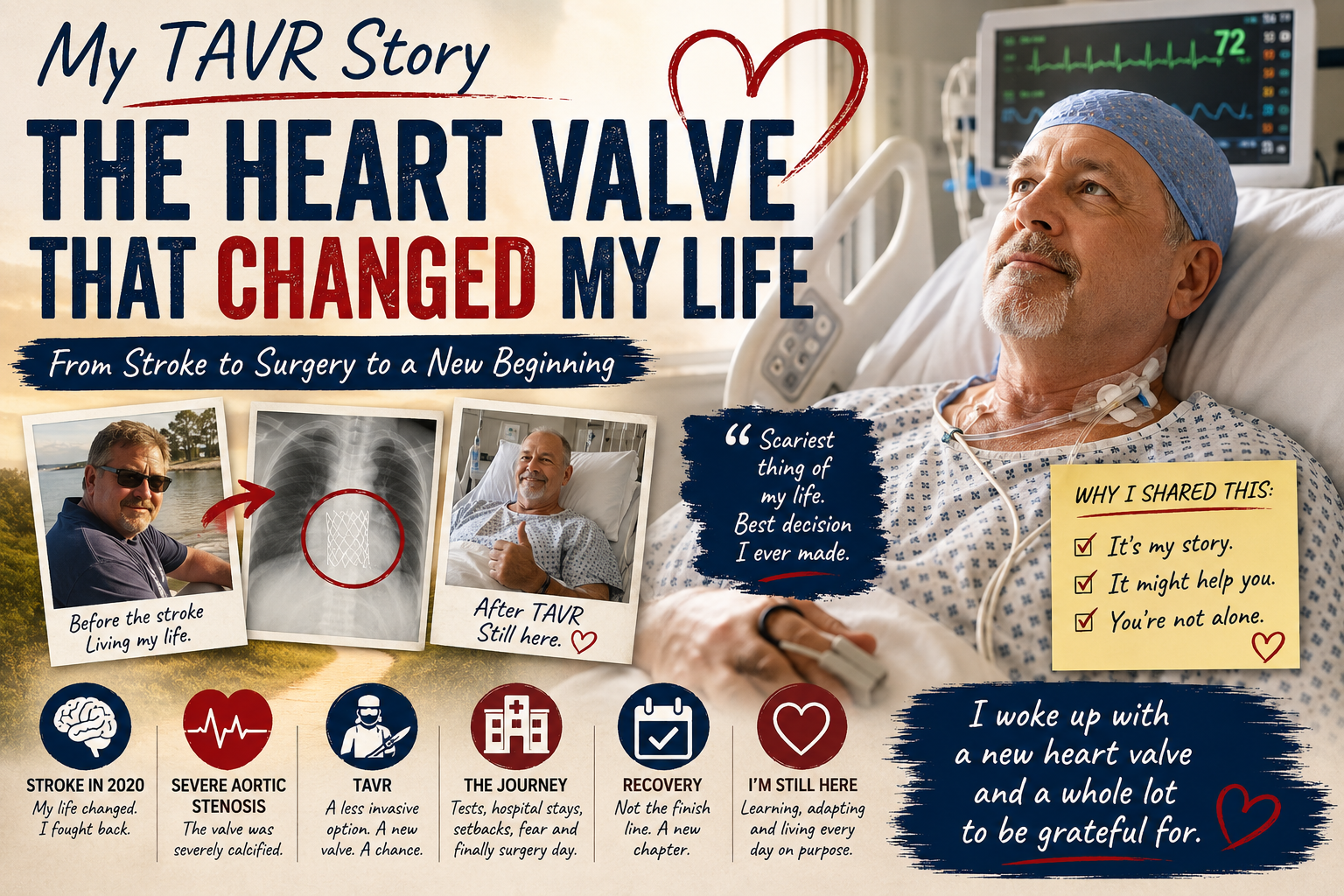
I didn’t feel good. I was having chest pains. My blood pressure was high. I already knew I had aortic stenosis and was waiting to be scheduled for surgery to replace my aortic valve.
At the time, I thought the two things went together pretty simply.
My valve was bad. They would replace the valve. I would recover. Then I would be fine.
Well, apparently I misunderstood part of that conversation.
The heart failure wasn’t necessarily going away.
I have HFpEF — heart failure with preserved ejection fraction — and it took me about three months after having my heart valve replaced to fully understand that this was something I was going to have to manage going forward.
That realization changes things.
The First Thing You Do Is Google It
Fast-forward a little bit and, like most people who suddenly find themselves diagnosed with something serious, I started reading.
And reading.
And reading.
You Google congestive heart failure and eventually ask the question everyone is probably afraid to ask:
How long am I going to live?
Then you see statistics saying things like half of people with heart failure die within five years.
Well, shit.
Those aren’t exactly comforting odds when you are sitting there trying to figure out what just happened to your life.
But statistics need context. Heart failure affects a huge range of people with different types of heart failure, different ages, different health conditions and different levels of disease.
A statistic doesn’t know me.
So I started trying to learn specifically about HFpEF: what it is, how people manage it and what living with it actually looks like.
There is certainly no shortage of information online.
There are thousands of pages from hospitals, government agencies, heart foundations, pharmaceutical companies, doctors and researchers.
Much of that information is incredibly valuable.
But I wanted something else too.
I wanted to hear from people living with it.
I wanted someone to talk about chronic illness in language I understood.
Where Are the Regular People?
I started searching websites and blogs for personal experiences.
What surprised me was how difficult those could be to find.
Most of the results took me right back to hospital websites, medical organizations, pharmaceutical companies and foundations.
There wasn’t nearly as much from the person sitting at home trying to figure out:
What does my life look like now?
That’s one of the reasons I eventually started He’s Knocking on My Door.
I’m not a medical organization.
I’m just someone living through this stuff and trying to make sense of it.
Then I Found the Facebook Groups
Eventually I started looking through Facebook.
And as everyone who has spent more than five minutes on Facebook knows, there is some good stuff there and there is some absolute garbage.
I’ve tried quite a few groups. These are some of the ones I’ve continued to follow:
- Congestive Heart Failure Support
- Aortic Valve Replacement Group
- TAVR (TAVI) Information and Support Group
- Diastolic Dysfunction aka HFpEF Pulmonary Hypertension Group 2 & Related
- Chronic Kidney Disease (CKD) Renal Diet and Recipe & Meal Plans
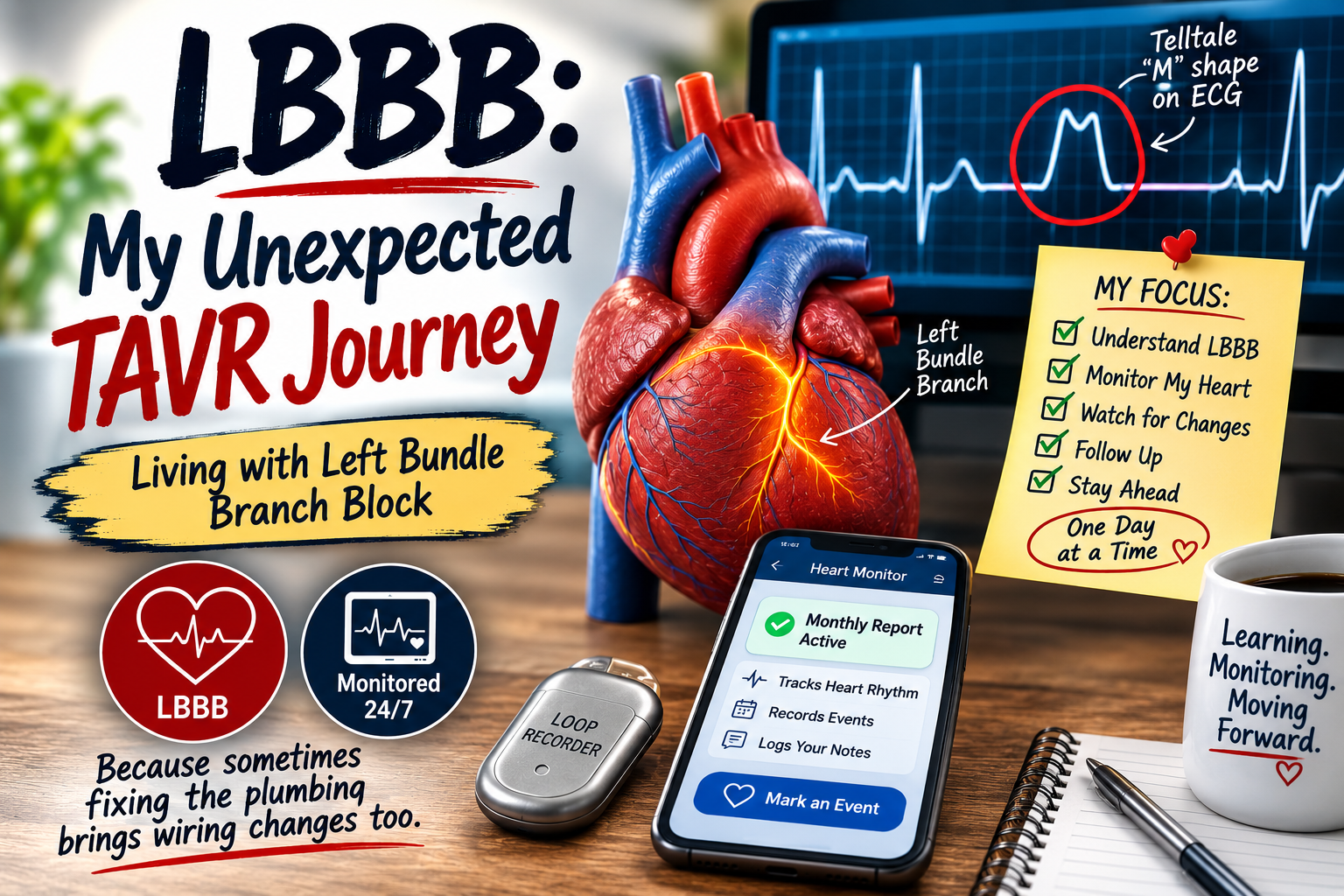
- Left Bundle Branch Block (LBBB) & Cardiomyopathy
- Left Bundle Branch Block
- HFpEF
- Lo Sodium and Heart Healthy Recipes
- Salt Free 123 Salt Free Recipes
There are tons more.
These are simply the ones I’ve tried and, for one reason or another, continued reading.
Hearing Other People’s Stories Helps
My experience with the illness-specific support groups has generally been positive.
Most people genuinely seem to care.
Everyone is there because either they or somebody they love is dealing with an illness. People understand fear, uncertainty and frustration because they have experienced some version of it themselves.
Sometimes you just need to hear somebody say:
I’ve been there too.
Those groups contain thousands of stories.
Someone talks about being exhausted.
Someone talks about swelling.
Someone talks about being afraid before valve surgery.
Someone talks about adjusting to medication.
Someone talks about having a good day after weeks of bad ones.
I read their experiences and sometimes see pieces of my own situation in them.
I’m not looking for a cure from Facebook.
I’m trying to understand the journey.
There is a difference.
The Dangerous Part: Everybody Becomes a Doctor
There is also a problem with medical support groups.
People want to help.
Sometimes they want to help a little too much.
You mention a symptom and suddenly people are telling you which medication you should take, which medication you should stop taking, which supplement cured their problem or what your doctor should be doing.
That’s where you need to be careful.
Your medical team should be the people giving you medical advice.
What works for one person may be completely inappropriate or even dangerous for somebody else.
The person answering your Facebook post doesn’t know your medical history, medications, kidney function, blood pressure, lab results or the hundred other things your doctors may be considering.
I didn’t join these groups looking for strangers to treat me.
I joined because I wanted to hear how other people were living with their conditions.
That can be incredibly valuable.
Medical advice from strangers?
Not so much.
Then There Are the Food Groups
The food groups have been a completely different experience for me.
I’m sure the overwhelming majority of people in them are perfectly nice.
Unfortunately, sometimes the internet trolls are considerably louder than everybody else.
When you’re dealing with heart failure and trying to completely change how you eat, you’re already overwhelmed.
I’m trying to find low-sodium food that doesn’t suck.
That’s challenging enough.
I don’t need to post something I’m eating and have somebody tell me I’m doing everything wrong because their idea of the perfect heart-healthy diet is different from mine.
I’ve tried several food groups and eventually left many of them.
There can be useful information buried in there, but sometimes the negativity isn’t worth digging through.
Chronic illness already consumes enough mental energy.
I don’t need Facebook taking the rest.
Podcasts, TikTok and Everything Else
I’ve also listened to some very good podcasts about chronic illness and heart disease.
Most of the ones I’ve found are produced by doctors, hospitals or other medical professionals.
Again, that’s valuable information.
What seems much harder to find are podcasts from average people simply talking about what it is like to live with these conditions every day.
I understand why.
Creating a podcast, website or regular video content takes a lot of work.
I’ve seen some chronic illness content on TikTok too. A lot of it seems centered around weight loss, exercise or individual pieces of someone’s health journey.
But I still haven’t found nearly as many people simply saying:
Here’s what happened to me. Here’s what I’m dealing with. Here’s what worked for me. Here’s what didn’t. Here’s what today was like.
That’s part of what I’m trying to do here.
This Website Is Part of How I Cope
He’s Knocking on My Door started partly because I couldn’t find exactly what I was looking for.
I wanted the patient side of the story.
Not another definition of HFpEF.
Not another diagram of the heart.
Not another medical paper that requires me to look up every third word.
I wanted to know how people live with this stuff.
How do you deal with the fatigue?
How do you change your diet?
How do you handle the fear?
How do you adjust when you can’t physically do everything you used to do?
How do you deal with family and friends who don’t completely understand?
How do you keep living your life when chronic illness suddenly becomes part of it?
Writing about those things has become a coping mechanism for me.
If somebody else happens to find something helpful in my experience along the way, even better.
Social Media Isn’t Medicine — But It Can Still Help
There is an incredible amount of chronic illness information on social media.
Some of it is helpful.
Some of it is wrong.
Some of it is supportive.
Some of it will scare the hell out of you.
And some of it should probably never have been posted in the first place.
You have to learn to separate someone sharing their experience from someone giving you medical advice.
Those are two very different things.
I would never recommend changing medication, treatment, diet restrictions or anything else medically significant because somebody in a Facebook group told you to.
That’s a conversation for your medical team.
But I absolutely believe there is value in hearing other people’s stories.
Sometimes those stories help you understand what questions to ask.
Sometimes they help you realize that something you’re experiencing isn’t unique to you.
Sometimes they help set realistic expectations.
And sometimes they simply make you feel a little less alone.
When you’re suddenly living with a chronic illness, that can matter more than people realize.
Use social media as a place to listen, learn and connect. Just don’t confuse the person sitting behind a keyboard with the doctor sitting across from you.
Disclaimer: This article is based on my personal experiences and observations while living with chronic illness. The Facebook groups, websites, podcasts, and other resources mentioned are shared for informational and community-support purposes only. I am not endorsing any medical advice, treatment, product, or recommendation made by members of these groups. Always discuss symptoms, medications, treatments, diet changes, and other medical decisions with your own healthcare team. Online support can be helpful, but it should never replace professional medical care.