Walking through Home Depot.
Grocery shopping.
Standing in the kitchen.
Fixing something around the house.
Going out for dinner with friends.
These are not exactly bucket-list activities.
Before I got sick, I wouldn’t have given any of them a second thought.
Now?
They are some of the things I miss the most.
I Thought I Was Invincible
Before all of this happened, I thought I was pretty much invincible.
I was always a bigger guy, but I never really let that stop me from doing anything.
I had a full-time day job, but I almost always had some kind of side hustle going too.
My last one became a pretty successful woodworking business.
I made small furniture, mostly farmhouse-style pieces.
I also had a CNC machine that I used to make signs, plaques, games, decorative pieces, and details for some of the furniture.
So I would work my regular job during the day and then spend nights and weekends in the shop.
I didn’t sleep much.
Not because I couldn’t.
Because I was always doing something.
Looking back now, it feels like that guy lived somebody else’s life.
Then COVID Changed Everything
COVID slowed the woodworking business down considerably.
A lot of things were shut down, customers weren’t spending the same way, and eventually I scaled the business back.
I moved out of my shop and back into my garage.
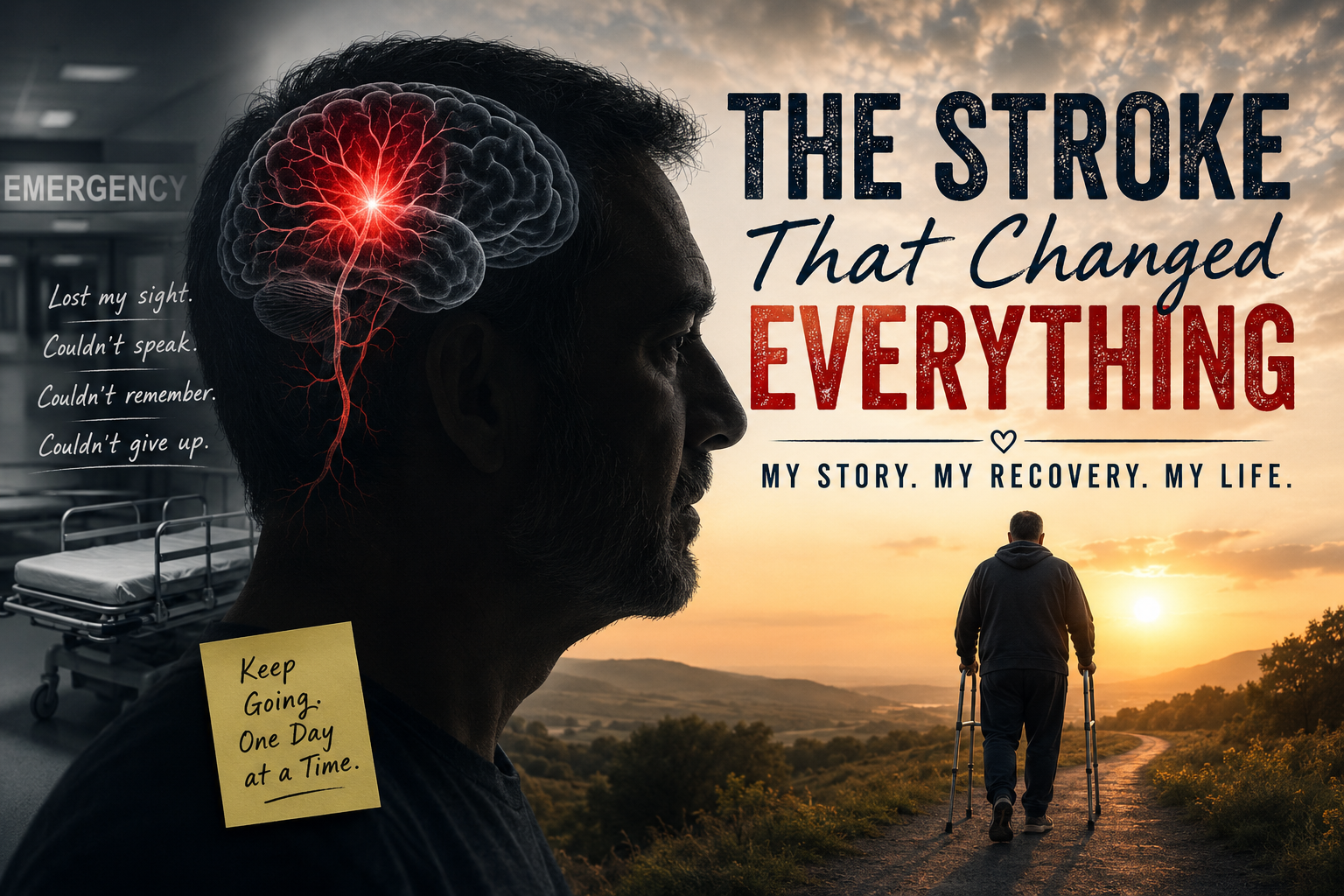
Then, in late 2020, I had a stroke.
That changed everything.
I had to learn how to communicate again.
My brain still works differently today.
I have trouble finding the right words.
I know what I want to say, but sometimes the word just isn’t there.
I try to type something and something completely different appears on the screen.
Even writing these articles is exercise for my brain.
I use voice dictation a lot.
Then I go back and edit what came out.
Sometimes I use AI afterward to help clean up the spelling and grammar because I still mix up letters and my spelling sucks.
Although, to be fair, maybe my spelling always sucked.
The stroke made it impossible for me to continue doing the kind of work I had done before.
Eventually, I took an early retirement.
I still had kids at home.
I still needed to help provide for my family.
At the time, retirement was the best option I had.
I tried other jobs afterward.
Then the heart problems started.
If you’ve read the other stories in the Living With It section of this website, you already know where that road went.
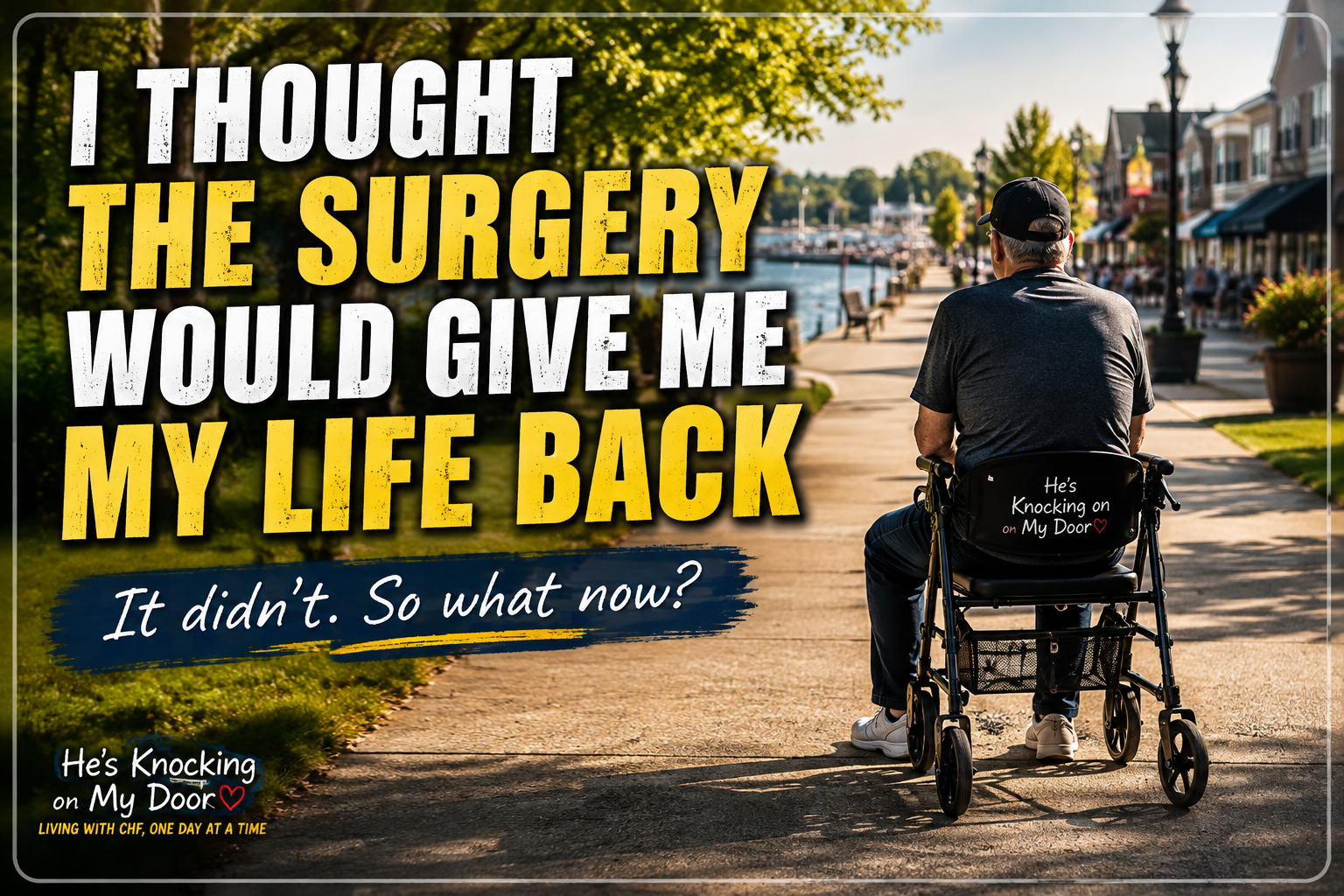
First a Limp. Then a Cane. Then a Walker.
Eventually, my hips started giving out too.
First came the limp.
Then the cane.
Now I use a walker.
I have tried walking through a grocery store using a shopping cart for support.
At first I’m usually okay.
By the time I get toward the end of the store, the pain can become brutal.
Both hips are in terrible shape.
So even when my heart might cooperate, my hips sometimes don’t.
And when my hips cooperate?
My heart may decide it is its turn.
That is one of the frustrating parts about having multiple chronic conditions.
There is always somebody waiting to tag in.
My Heart Changed What Walking Means
Over time, my heart problems progressively got worse.
I have now had my aortic valve replaced.
I have persistent atrial fibrillation.
I developed a left bundle branch block.
And I have HFpEF, a form of heart failure.
Put all of that together and physical activity is not what it used to be.
Sitting down, I can feel relatively normal.
Then I start walking.
Especially if it is hot and humid.
Sometimes I become very lightheaded.
There have been times where I have felt like I was going to pass out.
Then comes the sweating.
Not a little perspiration.
I’m talking buckets.
Then anxiety joins the party.
That makes everything feel worse.
Thankfully, I have been through enough cardiac testing that I understand more about what is happening to me, and I know when I need to stop and rest.
Usually, after sitting for a while, things settle down and I can move again.
But sometimes a walk of only 500 or 750 feet in Florida heat can completely wipe me out.
Think about that.
Not five miles.
Not even one mile.
A few hundred feet.
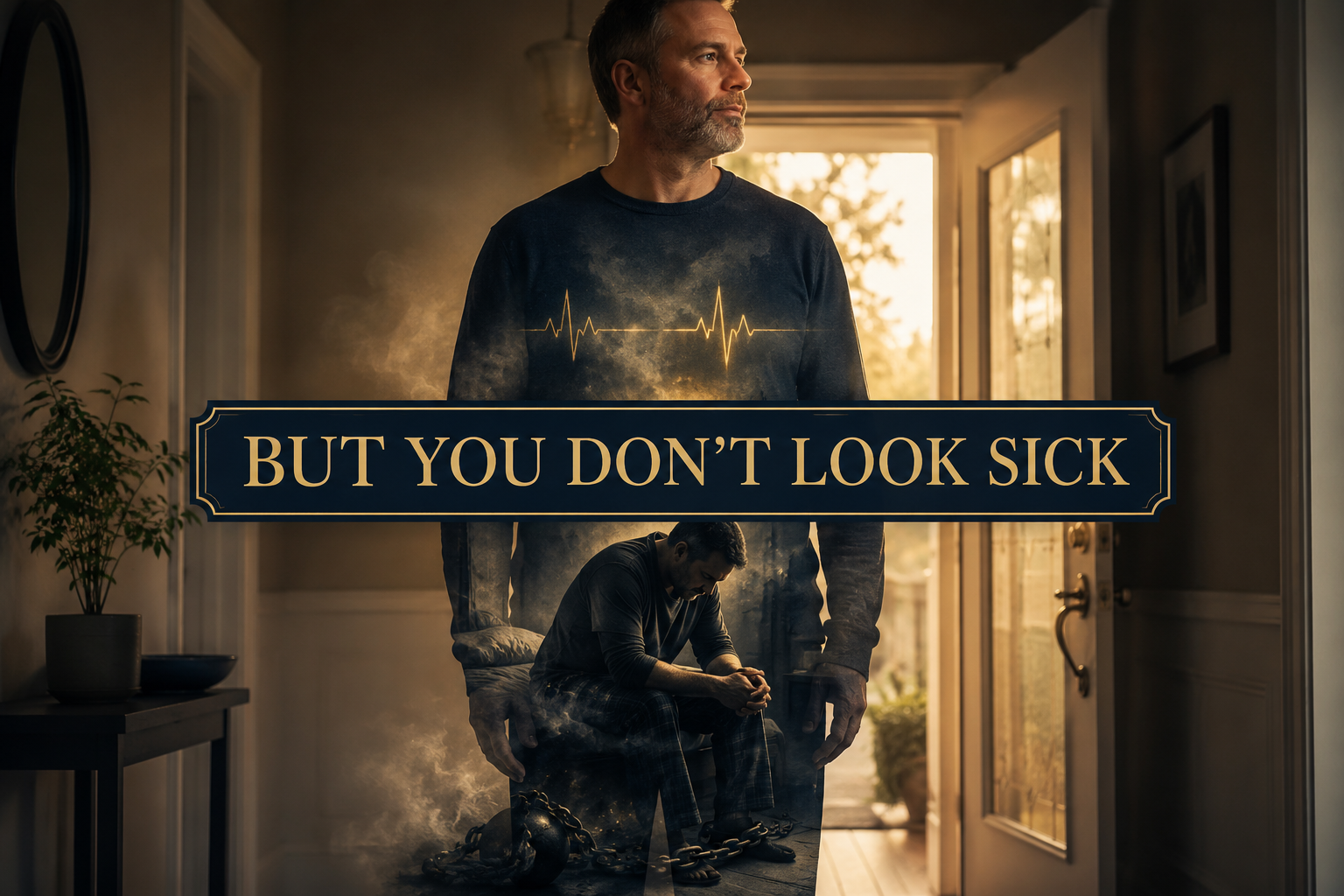
I Became a Prisoner in My Own Home
When you live with chronic illness and mobility problems, your world slowly gets smaller.
That is one of the hardest parts to explain to somebody who has never experienced it.
I sometimes call it being a prisoner in my own home.
Something breaks around the house?
Before, I would jump in the car and run to the hardware store.
Leaky sink?
Broken toilet valve?
Need a piece of wire or a fitting?
No big deal.
Home Depot.
Done.
Now there are calculations involved.
Can I walk through the store?
How far is the parking spot?
Will there be somewhere to sit?
How hot is it?
How bad are my hips today?
Can I actually do the repair once I get home?
So instead, I use curbside pickup.
Or Amazon.
Lots and lots of Amazon.
Even doing the actual repair can be a challenge.
Changing a toilet valve?
Maybe.
As long as I don’t have to get on the floor.
Because getting down is one problem.
Getting back up is a completely different one.
The other day, I had to get on the floor to move some wires that the vacuum had pulled out.
I managed to get down there.
Getting back up?
Not so much.
I’m still nursing the pulled muscle from that brilliant decision.
There are days when I just want to be normal again.
Yes, I Know Grocery Stores Have Scooters
Whenever I talk about not being able to walk through stores, somebody inevitably says:
Why don’t you use one of those electric scooters?
I do.
They work pretty well.
The problem is everybody else.
Something happens when you sit down on one of those scooters.
Apparently, you become invisible.
People walk directly in front of you.
They stop in the middle of an aisle.
They cut you off.
They stand in front of something you are clearly trying to reach.
And unlike somebody standing there, you can’t necessarily just step around them or reach over and grab what you need.
You are stuck.
I understand that most people probably don’t even realize they’re doing it.
There was probably a time when I didn’t either.
But common courtesy seems to disappear quickly when you are the person sitting on the mobility scooter.
Costco and Sam’s Club are probably the worst.
If you ever hear some guy on a scooter muttering obscenities as people continually walk in front of him…
There is a decent chance you found me.
LOL.
I’m honestly surprised I haven’t been kicked out yet.
I Miss Going Out to Eat More Than I Expected
One of the biggest things I took for granted was simply being able to eat and drink whatever I wanted.
I was fat.
At one point I weighed more than 400 pounds.
So clearly, I enjoyed food.
But food was never only about eating.
For me, it was social.
Meeting friends.
Having dinner.
Having a drink.
Talking.
Laughing.
Trying a new restaurant.
Trying food I had never had before.
Those things were part of my life.
Now I have HFpEF.
My heart doesn’t relax normally, and one of the things I have to manage is fluid retention.
Part of my treatment plan involves controlling both my sodium and fluid intake.
Sodium makes the body hold onto water.
That means restaurant food can be incredibly difficult for me.
And restaurants love sodium.
Lots of it.
Even foods that sound harmless can have an enormous amount.
Chicken.
Shrimp.
Salad dressing.
Bread.
Sauces.
Seasonings.
Soup.
Vegetables that have already been seasoned.
Sometimes there isn’t a realistic way for me to know exactly what I’m getting.
So we rarely go out to eat anymore.
And that has taken away something much bigger than restaurant food.
It took away a social activity.
Dinner with friends.
Dinner with family.
Trying a new place.
Sitting around the table and laughing.
That is what I miss.
The Mundane Things Become the Important Things
Before chronic illness, walking through Home Depot was nothing.
Going grocery shopping was a chore.
Standing in the kitchen cooking dinner was normal.
Meeting somebody at a restaurant was just Tuesday night.
I never stopped and thought:
I should appreciate being able to do this.
Who would?
You don’t appreciate being able to stand at a kitchen counter until standing at a kitchen counter hurts.
You don’t appreciate walking across a parking lot until you have to calculate whether you can make it.
You don’t appreciate wandering through a hardware store until wandering becomes impossible.
You don’t appreciate dinner with friends until your diet makes dinner with friends incredibly complicated.
That is probably one of the strangest lessons chronic illness has taught me.
The things you miss most are not always the big things.
Sometimes you just want to walk through Home Depot.
Will I Ever Be the Old Me Again?
Probably not.
That is something I am still learning to accept.
I am hoping to get my hips replaced.
They have been bad for a long time, and I am hoping surgery eventually allows me to walk without a cane or walker again.
Right now, I own four walkers and a motorized scooter.
I would love to make all of them unnecessary.
But fixing my hips won’t fix everything.
Heart failure is still there.
The atrial fibrillation is still there.
The sodium restrictions are still there.
The fluid restrictions are still there.
Those things have to be managed.
And this is where I still struggle.
If I control everything incredibly tightly, physically I may do better.
But there is another side to living.
Enjoyment.
Food.
Friends.
Going somewhere.
Laughing.
Being spontaneous.
Having a life that isn’t completely centered around medical numbers.
That is the compromise I am still trying to figure out.
How do you protect your health without giving up every part of life that made you happy?
I don’t have the answer yet.
Maybe I never will.
But I know sitting at home waiting for the end isn’t the answer either.
So I keep trying.
A trip to the beach.
Furniture store.
Small project around the house.
A meal I actually enjoy.
Whatever I can manage.
Because I may never get my old life back.
But that doesn’t mean I’m done trying to build a life with the one I have now.
Medical Disclaimer
This article reflects my personal experience living with multiple chronic medical conditions and mobility limitations. It is not medical advice and should not be used to diagnose, treat, or make decisions about heart failure, atrial fibrillation, mobility problems, sodium or fluid restrictions, exercise, medications, or any other medical condition. Individual symptoms, physical limitations, and treatment plans vary significantly. If you experience chest pain, fainting or near-fainting, severe shortness of breath, new or worsening swelling, significant dizziness, or other concerning symptoms, seek appropriate medical care. Always discuss activity levels, diet, fluid restrictions, medications, and treatment decisions with your own qualified healthcare professionals.